- The Intersection
- Posts
- The Everywhere Store
The Everywhere Store
Stop broadcasting and start building community.

Daniel Francavilla
February 27, 2026
This week I was seated on stage between leaders from 2 major tech giants: Amazon and Snapchat…

It was at the refreshed DX3 conference in Toronto, where we were on a panel called The Everywhere Store: Mastering Social Commerce in the Digital Age.
You can probably guess the vibe.
Augmented reality. Retail media. Livestream shopping.
The kind of conversation that makes you feel like the future is now.
It was about the convergence of commerce and content, and how brands can build seamless digital paths to purchase in an “everywhere store” world.
One of the other panellists, Richard (who I’ve known for years since my early agency days), now works at Amazon Ads. He was talking about the difference between impressions and outcomes — how some love celebrating reach and engagement, but the business reality is: Did they add to cart? Did they visit the product page?
He shared a story about a brand that went viral and had to air freight inventory overseas to keep up with demand. (A very 2026 problem to have).
What stood out from our discussion wasn’t the tech or the logistics (thankfully, which I know very little about).
It was reflecting on how social changed — not the platforms, but how people are using it, and then how brands can adapt.
And when you think about it, some brands are still treating social media like TV because they basically broadcast. They plan for weeks or months to produce a glossy “hero video”, post it and hope it does the thing. When it gets likes but not sales, they blame the platform… or the algorithm.
At some point, social stopped being “where you post updates for friends” and became “where you make decisions.”
People used to see an ad and then go research.
Now, the research is the feed.
The proof is the comments.
The recommendation is a creator you trust or a friend who sends you a screenshot and says, “Should I get this?”
Martin from Snapchat called it a “shared journey.”
Shopping as a group ritual, even when you’re alone in your living room.
That’s the part that’s easy to miss if you work in marketing.
Because when you’re inside the industry, you can get distracted by the machinery.
But consumers (that’s you and me in everyday life) aren’t thinking about funnels and attribution.
They’re thinking: “Is this real?” or “Is this worth it?”
“Will I regret this?”“Does this actually work for someone like me?”
And they want the answer quickly.
They don’t want to open 16 tabs, or to do a full investigation.
They want to feel confident enough to click.
That’s where the concept of contextual proof comes in.
I brought this up in an answer on the panel, too.
Proof that’s right there in the moment — inside the post, inside the comments, inside the creator’s demo. Not “trust us” or “learn more.” Just “watch this work.”
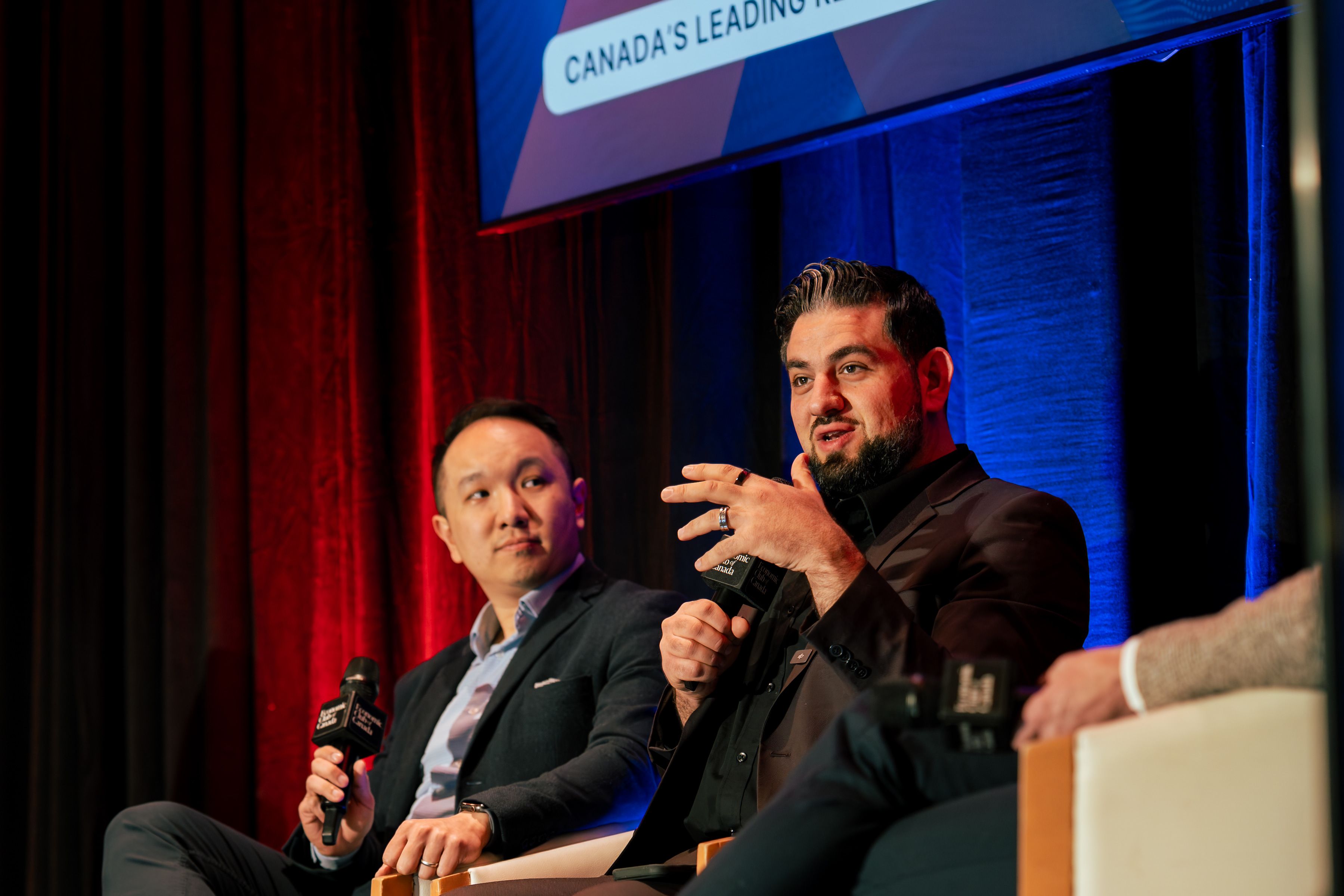
Photo by Conference Media @ DX3 2026
Where community comes in
You could argue that social media was truly about community when it first started. But as I mentioned above, it’s definitely not the only thing.
This year, I’ve been speaking a lot about community, and it really plays a role here. That's why one of my answers during the panel discussion was…
If you haven’t built a community on social by now, what you actually have is a commodity. And commodities get crushed on price.
Sounds harsh, but it’s true. Because if you’re not building something people feel connected to, you’re competing on:
convenience
discounts
shipping speed
being the cheapest version of yourself
That game only gets harder. Especially now.
A reminder that brands are part of something bigger
Speaking of community, there’s a social impact layer to all of this that we can’t ignore:
When brands and platforms become the places where people “learn what’s true” and decide what to support, community isn’t just a growth tactic — it’s a responsibility.
The communities that get listened to, represented, and resourced will shape what products get made, which creators get paid, and which businesses get to scale.
Done well, social commerce can redistribute opportunity — putting real earning power in the hands of local creators, small businesses, and voices that have historically been left out of traditional retail and advertising.
Done poorly, it becomes extraction: a constant cycle of trend-chasing, underpaid creators, and brands borrowing culture without giving anything back.
The challenge (and the opportunity) is to build communities that are mutual — where people aren’t just audiences or “customers,” but stakeholders — and where the brand’s growth actually strengthens the ecosystem around it.
What I learned from my own D2C experiment
Most of my work lately has been B2B — founders, leaders, organizations.
But last year, I built something on the consumer side too.
And for this particular product, the industry was crowded. There are local and global brands, there’s trend-chasing, and inventory challenges.
It would’ve been easy to assume the way to win was ads and scale.
But I didn’t take that route. In fact, I spent $0 on paid ads.
Instead, I focused on a smaller, more human bet:
Local creators and fans. Real people enjoying the product.
Stories that felt like “this is part of my day”.
In a few months, it generated hundreds of thousands of organic views — not because I hacked the algorithm or gave away thousands of dollars in free product (I did neither), but because people actually wanted to share it.
When people feel like they’re part of something, they carry it for you.
You don’t have to force distribution.
You don’t have to beg for attention.
Your community becomes the channel.
Why this matters even more with AI
We’re heading into a moment where creating content will become cheaper and cheaper.
Perfect product photos. Clean captions. Systematized video scripts.
It’s already happening. Which means the internet is about to be flooded with “pretty good” marketing.
So what becomes valuable? The essentials you’ve heard from me before:
Human voice, trust, belonging, community.
You can have the best tech stack in the world, but if you don’t have a human-led brand, it’s harder and harder to win.
That’s what I said on stage. It wasn’t a jab at Amazon or Snapchat, but a word of advice to all sizes of business.
The everywhere store isn’t really about “being everywhere.”
It’s about being remembered and being believed wherever people find you.
By the way, here's a few more thoughts on that:

What about businesses serving other businesses?
The conference focused on Retail & Marketing, but I asked the audience who works in B2B, and a lot of hands went up. So I shared a simple reminder:
Most of your market isn’t shopping right now.
They’re not actively searching for your service.
But when they are ready, they’ll remember the people who showed up consistently.
The founder, employee, or person who shared a perspective that actually helped them.
So if you’re in B2B and you’re ignoring founder-led or employee-led content, you’re leaving trust on the table.
And trust is what turns “we’ve heard of them” into “let’s call them.”
That’s why I’ve built my next offering for B2B leaders. And why I’ve put out so many resources on thought leadership, founder-led marketing and more.
4 things to take away from what I shared
Here are a few key things I shared on LinkedIn while it was still fresh after the event:
Stop broadcasting. Start building.
Many brands still treat social like television — relying on polished “hero” ads while neglecting community. The magic happens when you loosen the grip on strict brand/legal control and empower your community (customers, creators, employees) to speak with you, not just about you.Contextual proof is the ultimate conversion driver.
What moves someone from scrolling to buying isn’t another perfect ad. It’s proof inside the post — creators using it, real comments, real reviews, real reactions. People don’t want to leave the app, open tabs, or do homework. They want confidence right there in the feed.Community is your only moat against AI.
As AI drives the cost of content toward zero (not that it will be the best), your human voice and real community are what will outlast the tech. As you’ve already read in the example above, I shared how a brand I launched in a highly competitive market, with global supply shortages, and spent nothing on paid ads. We leaned into community-led storytelling instead, and generated hundreds of thousands of organic views in a few months purely through people enjoying and sharing the product.Founder and employee-led content are key for B2B.
For the B2B audience, the vast majority of your market isn’t actively buying today. But when they are ready, they’ll remember the founders and employees who consistently shared real perspectives and built personal trust — especially on platforms like LinkedIn. (Your people are the brand, whether you plan for it or not.) Reach out if you want to chat more about this one specifically.
Bigger than buying and selling
The panel was about social commerce, but it’s bigger than shopping.
It’s about what people do when they’re overwhelmed with choice.
They don’t research forever. They make a fast trust call.
If you’re not building the kind of brand that earns that trust — in public, over time — you’re going to feel it.
Not because your ads stop working, but because you become interchangeable with any other options out there.
If you’re building a brand right now, I’ll leave you to think about this:
What would it look like to stop broadcasting and start building?
PS — I’ll be sharing more clips from the panel discussion on my YouTube channel.
Feel free to subscribe there too, if that’s your thing.
Here's my most recent video about creating a Content Ecosystem where your brand can feel “everywhere” without buying ads on all platforms:
