- The Intersection
- Posts
- What chapter are you in?
What chapter are you in?
You don't always know until you've moved on to the next.On trajectories, stages, goals, time stamps and rock bottom.

Daniel Francavilla
January 16, 2026
2 weeks into the year, and people are divided on whether it’s good to say “Happy New Year” still. I hope your year is off to a great start. The holidays feel more like 2 months ago, and my workshops planned for yesterday were cancelled since Toronto seems to almost fully shut down when it snows (stay safe, stay warm). I’m home, excited and brewing up some collaborations and content…
This week’s edition is not about the new year, but it is kind of about starting a new chapter — whether that’s in work or life (or if you’re an entrepreneur, it’s pretty intertwined). And that doesn’t arbitrarily happen in January.
Dive in with me to talk about chapters, stages, goals, trajectories, time stamps and even rock bottom…
Chapters you only notice when looking back
Life moves in chapters and phases.
But you’re rarely aware of the moment one chapter ends and the next begins.
Often, it’s not a clean cut. Credits don’t start rolling.
No one taps you on the shoulder and says:
“Congrats, you’ve officially entered Season 4.”

Places become timestamps
I don’t know about you, but a lot of my memory is anchored in environment.
I’ll walk through a certain neighbourhood, pass a specific cafe, or get out at a subway station, and can suddenly recall the distinct era of my life that I may have frequented that spot.
It often gets “marked” by something tangible. A specific project, a goal or initiative, the season I took a course or program, or the chapter where I partnered with a company or founder, for example.
We measure time by calendars, but the deeper truth is that we experience time as moments, stages, shifts.

Our stage labels aren’t the same
I was on a call with a global company that supports business development and growth. Part of their process was to “place” me — to categorize what stage they thought I was in.
From my perspective, it wasn’t accurate.
The terminology and the framework didn’t fit the reality of how I operate.
Like many multipassinates, creatives and entrepreneurs I’ve met over the years (maybe that includes you), I don’t necessarily neatly map to a typical startup journey:
I’m a founder who left my agency a year ago, working on a few initiatives. I’m actively working as a content and brand strategist. Alongside that, I’m an educator in post-secondary schools, and training through other institutions.
There are overlapping identities, timelines, goals, and constraints — and they don’t always resolve into one definitive label.
So when someone tries to slot you into a single stage of your business journey, it can be useful, but it can also be strangely limiting. There are so many factors that shape what “stage” even means.
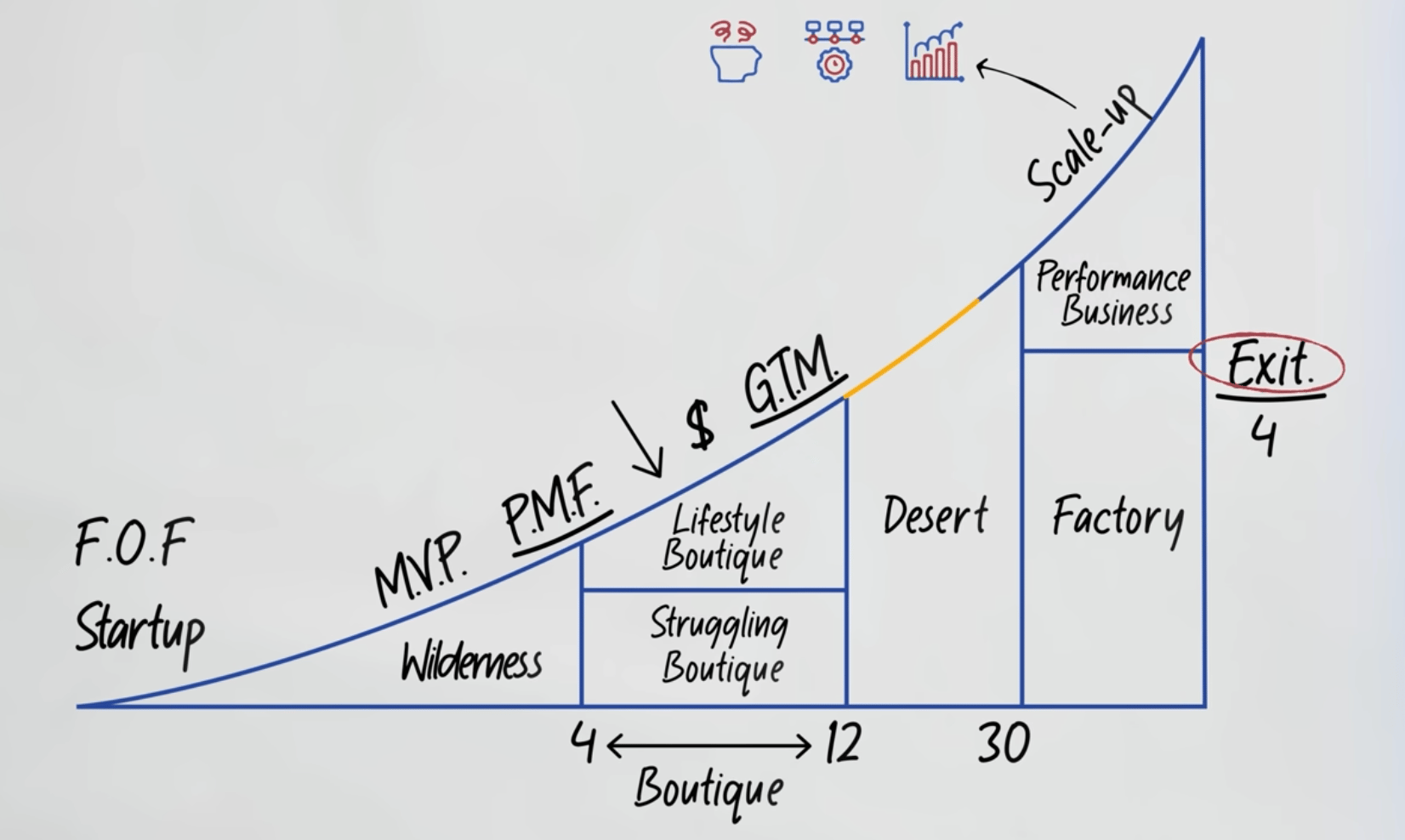
Source: Daniel Priestley on YouTube
Even if you’re following one single path, it’s not always clear exactly where you’re at (especially compared to others).
Unless you’re at the bottom, that’s easy to tell, right?
A decision, not a diagnosis
Feel like I should preface by saying that by no means am I at rock bottom in my life or my businesses 🙂
Rock bottom isn’t some official, universally agreed-upon milestone.
No one hands you a certificate that says, “This is it, the lowest you can go.”
Rock bottom is the moment you decide it is.
That flips the framing. It means rock bottom isn’t a life sentence.
It’s a launch point. The beginning of transformation, not the end of the story.
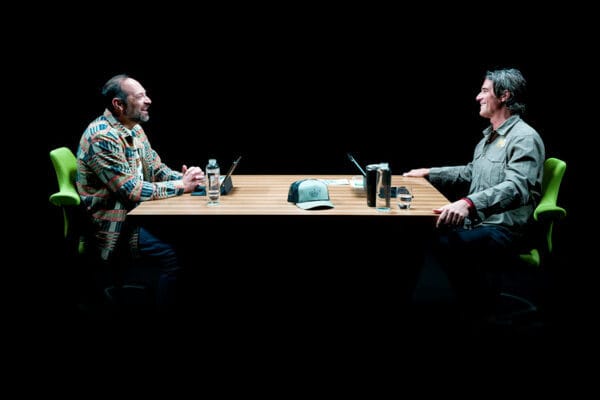
Why am I mentioning this? It’s what stuck out from another long episode of The Rich Roll Podcast called “Rich On Rock Bottom, Resolutions & Reframing Family Dynamics” with guest Adam Skolnick (episode 953 if you’re interested).
From rigid goals to trajectory
Since it was around New Year’s when I was listening, the notorious goal-setting season, I appreciated that Rich Roll said he has traded rigid goals for something more like trajectory.
Does this resonate with you, too?
I don’t feel especially motivated by rigid, overly quantifiable goals.
Not because there’s anything wrong with specific goals, but because they can become arbitrary. They can also get outdated fast.
Maybe you hit them and feel weirdly empty, or miss them and feel like you failed, even if you’re objectively building something meaningful.
Trajectory feels more honest. It’s about direction. It’s about the kind of life you’re building, and the kind of work you’re choosing, over time.
So yes, I’ve got some plans for 2026.
But the bigger question for us all to consider is:
What trajectory am I committing to?
For me, I’m thinking ahead to what I’ll be building — whether that’s a content-focused practice, a new kind of offering, going full creator-educator mode, or expanding one of my current ventures in any number of ways.
I don’t think questions like this are best answered by chasing a revenue goal. They’re answered by choosing a direction — then building the next right thing that supports it.
New year, new threshold
The end of 2025 feels long ago already, but I remember going for a walk in December where I found myself reflecting on all of this.
Not in a dramatic way, more in a quiet, “something is shifting” way.
Like I’m leaving a chapter, but I couldn’t fully name it yet.
Stepping into a new phase, but didn’t have the language for it.
Because careers, mission, your “personal brand” and really your life — it’s all a journey.
What’s most important is that you pay attention, rather than try to define the change perfectly.
What about you, founders or leaders?
A few takeaways based on what I’ve covered this week that could be helpful:
Measure your life by phases, not just dates.
The calendar is useful, but it’s not how you actually experience change.Be careful with other people’s frameworks.
Stage models can guide you, but they can also flatten the complexity of your real life and work.Rock bottom is often a choice to stop negotiating with reality.
It’s less about collapse — more about clarity and decision.Trade rigid goals for trajectory.
Goals can support you, but trajectory keeps you aligned with who you’re becoming.If you feel a shift happening, you don’t have to name it immediately.
Sometimes the most honest thing you can do is notice it, honour it, and keep walking.
What else? A few words for this year
You didn’t ask, but I’ve decided on 3 words for the year 2026.
Curiosity. Converge. Create.
Of course, I could’ve gone with just one, but they work together.
Staying curious and paying attention can lead to more/aligned opportunities to create, and convergence of different communities, organizations, my projects and ideas.
Back in October, I heard Chase Jarvis say this and noted it down:
“Create with wild, reckless abandon. Follow your instincts. Make weird stuff. Then curate with precision.”
So this year, I’m going to create more — regardless of if it’s for a client, on-brand or fits a specific social platform — then decide what I’ll invest in refining and sharing.
As I took these photos, I thought:

You can have all the notebooks in the world, but nothing to fill them with. You can be in the perfect space, with the perfect environment, with nothing to execute on.
That’s why it’s so important to stay inspired, pay attention to what comes to you, make connections and bring things together, and then curate what really resonates (making it your own).
Got a word (or 3) or an intention?
Reply to let me know.
PS — If you’ve been thinking about starting a newsletter this year, I’ll subscribe! I use and recommend Beehiiv. It includes everything you need to write, design, send, and expand your audience, all in one place. Get started here.