- The Intersection
- Posts
- Can you keep up?
Can you keep up?
A moment of clarity. And a not-so-weekly newsletter.

Daniel Francavilla
April 24, 2026
A year ago, I wrote about acting on ideas and starting more than you can finish.
I still agree with that. But I’m thinking more about consistency and frequency. Let’s take this newsletter as an example.
Why I still don’t call this a “weekly” newsletter
When I first launched The Intersection newsletter, I was hesitant to specifically describe it as weekly. Mostly because it was new, and I was still unsure how it fit into my life and schedule.
My intention was weekly, though, and I got into a rhythm of sending it on Fridays. This is edition 65, and counting. Sometimes I would write it late Thursday night. Sometimes early Friday morning. Other days, I would have a topic, some notes drafted, or a voice note ready to go from much earlier in the week and schedule it then.
I still avoid calling it weekly — even though I’ve had several streaks — because I knew there would be times when I couldn’t give it the effort it deserved.
We get enough mediocre emails every week, and from some sources, every day. Rather than just sending something for the sake of it — a quote or an unedited blob of AI copy that resembles a newsletter but not necessarily mine or my voice — I skip those weeks.
Sometimes silently. But sometimes purely because it wasn’t possible to fit in, given the workload or other focuses that particular week. Other times, intentionally prioritizing something else.
And you can do the same with your content.
Thinking about format
The Intersection is part of a broader content mix. It’s part of my whole content ecosystem. In some of my videos and LinkedIn posts, I’ve been sharing ideas that would be ideal to cover in the newsletter.
So I thought about potentially changing the format.
Maybe it becomes more recap-driven, I thought a while back. Maybe summaries, highlights, collections of individual posts. A bunch of smaller thoughts curated together.
There are already enough of those, though. (There’s always room to do it in a more unique way, however… I wouldn’t discourage you from doing so in a style that you own or a take that you add).
It may take me just as much time and effort to compile all of that and add meaningful context as to why something is worth looking at or listening to that particular week.
There are entire media companies built to do this full-time.
To recap headlines, aggregate and summarize news.
To report on trends, updates, and perspectives from different sources.
It could be viable. But it’s not what I’m trying to do here.
What are you here for?
The Intersection is really about sharing unique insights from my perspective at the intersection of the industries and communities I’m in, specifically making that relevant and valuable to you.
It’s incredibly important to understand what makes your content original.
A lot of what I’ve been reading and hearing focuses on this.
Lately at conferences, in reports, and on panels.
Everyone is talking about original thought.
Unique thinking. Perspective. Voice.
Mostly in response to AI, I’ve found, and how you make your content and brand feel real.
These are increasingly becoming the answers and a proactive solution.
I want to go in the opposite direction of newsletter automation services and AI-generated media companies that can fully automate stories, videos, and email sends without human oversight.
That’s definitely not where this is going.
There’s enough AI slop out there already.
Your unique lens matters.
This isn’t just about me.
It’s about you, too.
The value of your point of view
In many of the talks and workshops I’ve been giving as well, this idea of finding what is unique, and adding your own perspective, comes up more often.
I often remind people that even if you don’t love showing up on camera, especially if you’re a leader in an industry, a business, a nonprofit, or government, you do have a voice, approach, and point of view.
It just may not be officially defined or captured yet.
When it comes to content, the options can feel overwhelming. (Even for me).
I’ve lived and breathed content for years. I’ve run agencies.
Supported founders and leaders.
Managed my own content consistently.
Published different versions of blogs and newsletters over time.
Even today, I currently manage newsletters, mailing lists, and content ecosystems for the multiple ventures I’m involved in.
And yet this remains a common challenge:
Capturing thoughts regularly. Executing quickly enough.
One thing I keep hearing is that the gap between idea and action matters.
Idea to content. Moving from the insight to sharing it.
The shorter that distance becomes, the easier momentum builds.
But to do that, you need a system.
A rhythm and a process that works for you.
Just like squats at the gym, we need to put in those repetitions for progress to be felt.
(Believe me, I feel it… my legs are still sore).
Practicing before publishing?
I recently heard a podcast from people I followed years ago in the early days of blogging and social media.
They talked about their concept of getting a few colleagues or friends into a room and simply having conversations with microphones — without even hitting record.
Setting up “fake podcasts.” Just practicing.
I’m not necessarily recommending that. I’d still encourage recording. (There’s often unexpected gold in conversations, and insights you may want to revisit later).
But the larger theme remains the same:
Getting comfortable capturing ideas.
Putting things out into the world.
Documenting as content
Recently, Gary Vaynerchuk was on a podcast answering someone’s question about struggling to publish content.
He repeated something I’ve heard him say for years:

While I don’t fully subscribe to the “don’t create” part, I absolutely believe in the value of documenting.
What does that look like?
Filming your commute
Recording meetings
Capturing behind-the-scenes moments
Taking photos throughout your process
Having someone film parts of your work life
Sharing small observations as they happen
Documenting projects. Documenting wins. Documenting process.
Instead of artificially trying to manufacture “original thought” on command.
These ideas keep reinforcing something important: This is a moment where we should be paying more attention to how we capture and share what we already know.
Looking back at earlier content experiments
I started experimenting with this idea years ago.
Through my agency, we created a vlog series as a way to summarize what we were doing week-to-week.
At the time, it was likely inspired by creators like Casey Neistat’s epic daily vlogs and Gary Vaynerchuk’s Daily Vee series.
But distribution looked different then.
We would upload a full video to YouTube.
We’d place a link in our Instagram bio.
Instagram Stories didn’t really support linking yet.
Long-form video rarely gained traction.
Sometimes we’d include it in a newsletter recap.
But there wasn’t a complete system.
Fast forward a decade later, and the landscape is entirely different.
Thought leaders. Independent publications. Media brands. Some founders have even larger followings than their own businesses, and start to get other brand deals. I know multiple people who left journalism, communications, or marketing roles to launch their own media companies.
Many have embraced this era of content-first storytelling.
Which brings me to this week’s newsletter.
I’m writing this while driving late in the evening (well, recording the audio of it — 25 minutes total).
Driving is a rare window where I can fit this in. I live downtown and rarely even drive.
I know I have back-to-back meetings and a full studio shoot tomorrow (aka today).
But I thought: I’m not going to miss another Friday. There’s lots to share. And not every newsletter needs to be deeply researched, heavily structured, or packed with visuals, links, and supporting assets.
(Although I do appreciate the positive feedback from you when I go deep).
This week’s topic is really an update on what I’ve been talking about — and how I’ve been applying it to both myself and clients.
Workshops, founders and visibility
Next week, I’m giving a workshop globally for hundreds of founders and people working within the startup ecosystem. The focus is on visibility and how to turn your expertise into a LinkedIn audience that opens doors before you launch anything.
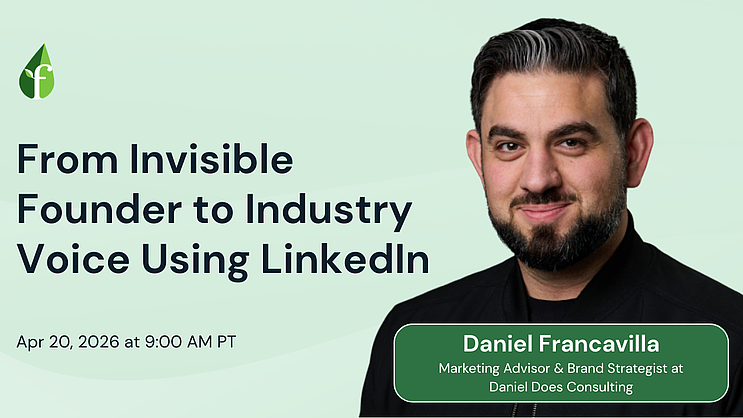
I recently delivered a similar workshop for creatives and creative entrepreneurs through OCAD University’s Centre for Emerging Artists & Designers.
This topic keeps showing up in my work.
Lately, I’ve been sharing something more practical: I launched my own content series. Not just to teach the theory, but to actively practice it.
Crafting content at scale:
The Moment of Clarity and more
This month, I launched Moment of Clarity, a big part of the content strategy behind my new offering, Clarity Content. I briefly mentioned it was coming in a previous edition, but now we’re fully operating.
We’ve had several studio days filming the Moment of Clarity series, including one today.
We just spent 2 full days filming founder and owner stories for Huumans, a client.
We attended events like Techskis, where we captured dozens of founder interviews.
I did the same at Builder Sundays, a community event by Shopify for entrepreneurs and builders.
It’s how I ensure I’m not only talking about content strategy, but I’m actually living it, testing it, refining the process.
By the way, if you’re in Toronto, we’ve opened up days where you can come in and get your own shoot.
A taste of how the process works
For Clarity Content, I’ve built a process that allows founders and leaders to capture expertise in a way that feels structured and sustainable.
It starts in the studio. (We can also do this virtually, yes, but if you’re in the Toronto area, being in-studio genuinely improves both the quality and the process).
We start with an in-depth onboarding and briefing process to understand voice and tone, content goals, expertise and themes, audience gaps and opportunities, topics worth owning, and the perspective someone wants to be known for, among other aspects.
From there, we run a monthly recording session.
Everything shared gets transcribed. We build an archive over time, a searchable library of ideas, themes, insights, and recurring expertise.
We can then use AI tools to analyze patterns, identify opportunities, and understand what topics are most active or valuable within a specific industry.
Then we turn that expertise into content: Videos, short-form clips, social posts as text or images, long-form articles, newsletters, even downloadable guides and resources. (All connected to a clear next step: An opt-in, booking a call, a download, a conversation).

Over time, it compounds. That’s where the tagline comes from:
Content that compounds.
Applying the system to myself
Personally, I’ve committed more to my own video content. And I’ve genuinely appreciated the feedback over the last few months.
I follow a very similar process myself.
Throughout the week, I collect ideas. Research, observations, responses, topics worth reacting to.
Then I build scripts or talking points.
I sit down in the studio, and I record. Then I transcribe and review what stands out. My editor and I work together to shape the strongest moments. We create outputs like:
A long-form version for YouTube
Short-form versions for Shorts and social
A backlog of content ready to publish over time
Notes that I can use for written social content or blog
Looking forward to sharing more of that with you.
A final thought
I’ve spent many years working in and around this world, and it feels incredibly rewarding not only to teach it, but to actively apply it every day (for myself and with clients).
We’re finding ways to make content feel original, valuable, and sustainable. It’s not always about reinventing the wheel, though. Often, it’s about using a proven model and putting your own perspective into it.
If you’re an individual or a brand looking to build a meaningful content and marketing strategy — or simply trying to find a better way to document what you do and share value — now’s a great time to reach out.
Whether you want to create something highly creative and ambitious, or simply become more consistent and top of mind, content can play a meaningful role within a larger ecosystem.
A visibility strategy, as part of a sales funnel, a trust-building tool.
Now, Clarity is here to support that process.
A few things to explore
If you’d like to see more of what I’ve been talking about…
Consider coming out to The Founder Signal, the event we’re hosting as part of Toronto Tech Week on May 25. (There’s already a waitlist, but if you message me and mention you’re a newsletter reader, I’ll try to move you to the top).

If you’d like to hear more about the content process, how I collaborate with my team, or what it might look like to work together, feel free to reach out. You can book a call here.
Until next week (or the next time I have a valuable edition worth sharing)…
Thanks so much for reading.
